Sound Check · As of Oct 7, 2026 · 3 min read
Sound Check: Testing the latest lip-sync models' ability with music-making models
Audio-driven models beat lip-sync patches on real songs; FlashTalk won at $0.38 per 15s.
Music House creators make music videos, and some of those need lip sync. So we tested which lip-sync models can keep up with a real song.
Same R&B chorus, same singer. Left: Sync lipsync-2 patches the mouth on a finished video. Right: FlashTalk makes the singer from the vocal. Drag to compare, tap for sound, and watch the silences.
With sound:Sync lipsync-2FlashTalk
We ran 10 lip-sync models on two songs, a female R&B chorus and a male rap chorus. Same singer image, same 15 seconds, one take each.
The inputs
We made both songs the way Music House makes them: our lyrics plus a style prompt, planned section by section.
- R&B: Stay a Little Longer
- Song, ElevenLabs Music v2: "Moody late-night R&B pop with a clear, upfront female lead vocal, close-mic'd and intimate, sparse 808s, warm Rhodes, soft synth pads, 78 BPM"
- Singer, FLUX.2 Max: "Shoulders-up close-up of an anonymous female R&B singer in her late 20s, shoulder-length braids, cream knit sweater, front-on, lips gently closed, blurred studio behind"
- Rap: Out the Basement
- Song, ElevenLabs Music v2: "Confident modern hip hop with a clear, upfront male rap vocal, punchy and rhythmic, hard 808s, crisp hi-hats, dark piano loop, 92 BPM"
- Singer, FLUX.2 Max: "Shoulders-up close-up of an anonymous male rapper in his early 30s, short beard, black beanie, green bomber jacket, front-on, lips closed, city rooftop at dusk behind"
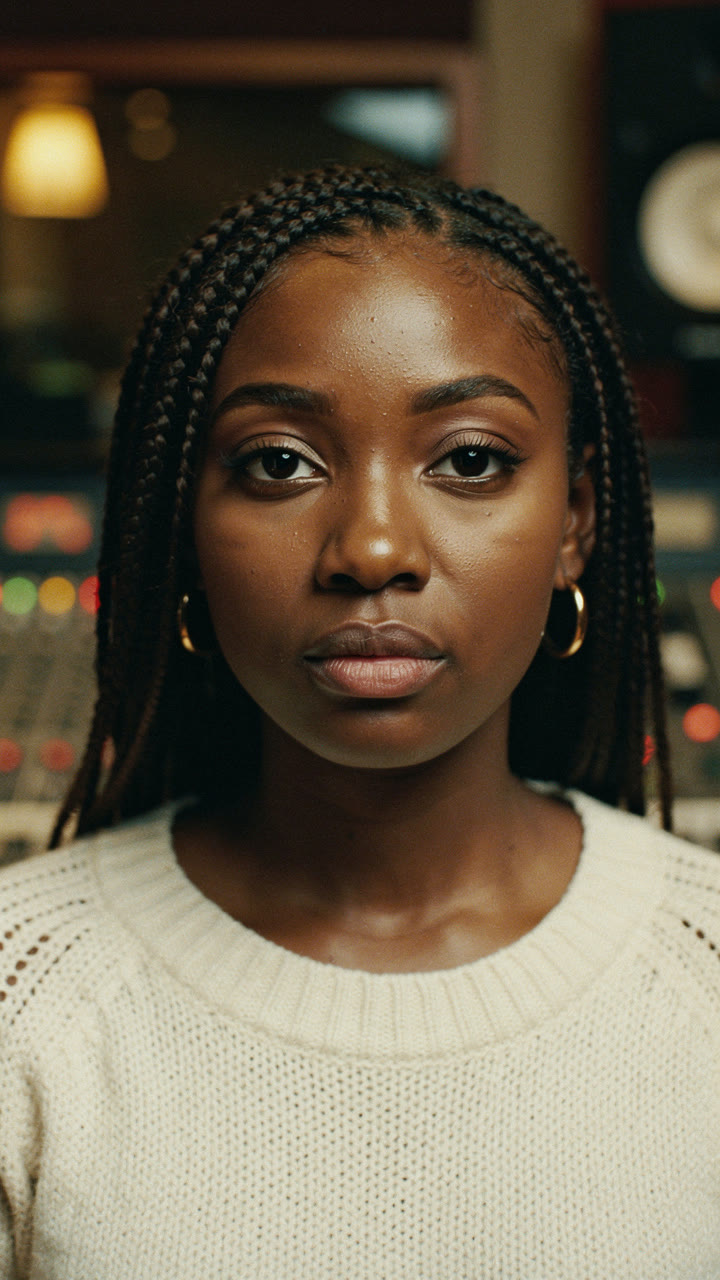
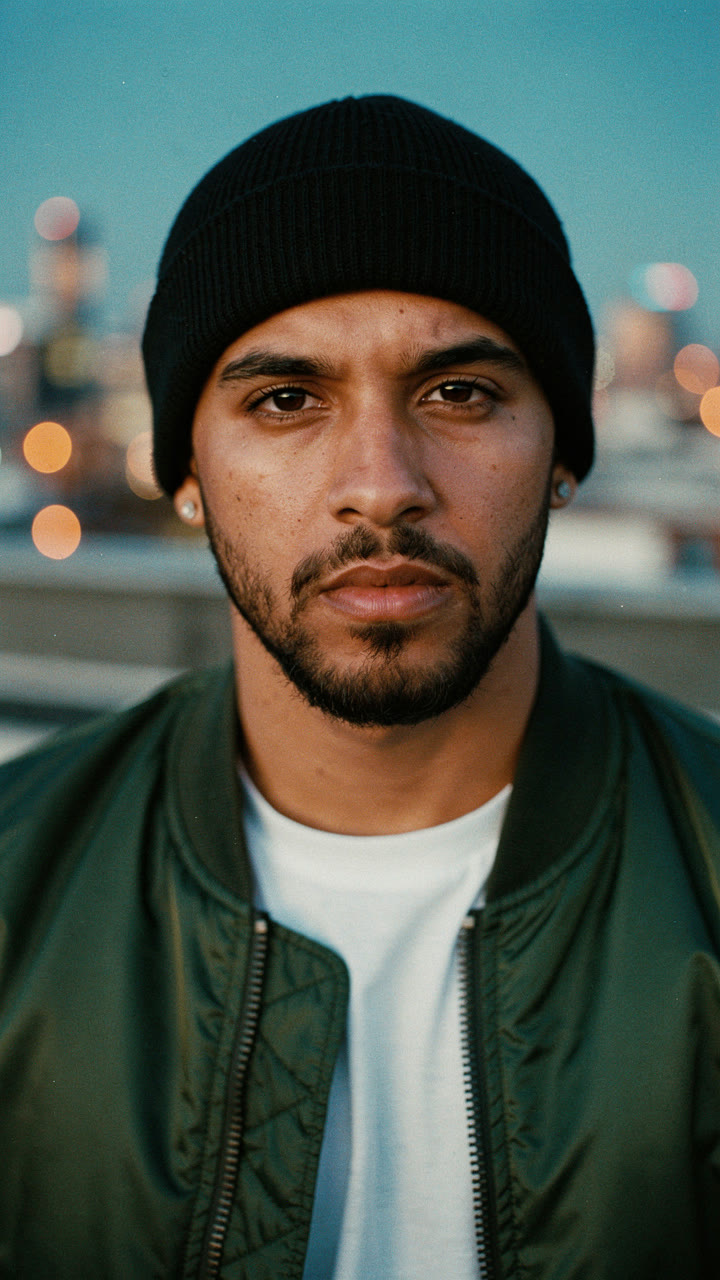
Singer prompts are shortened here. The full prompts and lyrics are in the raw data.
The leaderboard
FlashTalk
$0.38
Best sync and cheapest. Slow queue, 448p.
VEED Fabric 1.0
$1.27
Ties FlashTalk on R&B. Steady, 480p.
LTX-2.5 Fast
$2.02
Strong sync, 1080p in a minute. Face drifts.
Kling Avatar v2
$0.92
Good sync. Hands wander into frame.
Sync React-1
$4.00
Priciest. Lost the rap verse entirely.
Sync lipsync-2
$2.25
Best patch. Mouth never rests in the gaps.
MiniMax H3 Max
$1.27
Most natural motion, middling sync.
OmniHuman 1.5
$2.47
Slow. Hands in frame, face drifts on rap.
VEED Lipsync v2
$2.55
Big mouth shapes that run ahead of the voice.
HeyGen v3 Precision
$3.00
Light touch. Built to re-dub speech.
No lip sync (Omni base)
$1.50
Reference: the base video sings to its own beat.
Cost per 15 s includes the base video or singer image. Speed is the lip-sync step. Tap a clip to hear it.
How we score sync. MediaPipe measures how open the mouth is in every frame. We correlate that with the loudness of the vocal stem in the same frame. Higher means the mouth opens when the voice does, and 0 means no link. The gap ratio checks the silences: mouth opening in the vocal gaps against mouth opening while singing, lower is better. Full method
How we tested
- Every tool got identical inputs: the same Demucs vocal stem, and either the same singer image or the same base video.
- Claude Opus 5.5 in Claude Code ran and scored every clip on October 7, 2026.
- Sync is MediaPipe mouth opening against vocal loudness, frame by frame. Costs are FAL list prices for the run.
A few things we learned
- Drive the face from the vocal. Patches leave the mouth open in the gaps.
- One close-up per sung section. Front-on, nothing over the mouth.
- Wide shots fail. Patch or audio-driven.
With sound:Sync lipsync-2FlashTalk
Try it for yourself in Music House
 Music House
Make your song a music video
Turn on Singer performs in the Music Video Maker. It uses what won here: FlashTalk, with VEED Fabric as the fallback. Live on web and iOS.
Make a music video
Full method and data
Method
Everything ran on October 7, 2026, through FAL's API, one run per tool per song. We kept every result, including the bad ones. No retries, no picking the best of three.
Who ran it. Claude Opus 5.5 in Claude Code ran the test. It made the songs and singer images, called each model, pulled frames with ffmpeg, scored every clip and wrote the first draft of this post.
The songs. Two songs made the way Music House makes them: our own lyrics and style prompt, planned section by section and rendered by ElevenLabs Music v2. One is a moody female R&B song, the other a male rap song. Both choruses start at 16.3 seconds, so the test window is 16.3 to 31.3 seconds, taken from the song's section times.
The vocal. We split the vocals out of each window with Demucs (htdemucs). Every model heard the same vocal stem, not the full mix. The full mix goes back on top afterwards.
The singers. One AI-generated singer per song, made with FLUX.2 Max. Nobody real, no famous likeness. Each image follows the shot rule we learned in earlier rounds: one front-on close-up, shoulders up, face about a third of the frame, nothing covering the mouth, no hands, no microphone.
Two kinds of tools, identical inputs.
- Patch after tools change the mouth in a video that already exists. They all got the same base clip: Gemini Omni Flash 1.1 animating the singer image, 10 seconds plus a 5 second continuation from its last frame, joined into one 15 second shot with no cut.
- Audio-driven tools make the video from a still image and a vocal. They all got the same singer image and the same vocal stem.
We used default settings. Where a tool requires a setting, we name it: Fabric at 480p, OmniHuman at 720p, H3 Max at 768p, Sync React-1 in face mode with a neutral emotion, LTX at 9:16. LTX, Kling and OmniHuman accept a prompt, and all three got the same short one.
The score. For every frame, MediaPipe face landmarks give how open the mouth is. We correlate that with the loudness of the vocal stem. That is the sync score: higher means the mouth opens when the voice does. We also measure how open the mouth is in the vocal gaps compared with while singing, the gap ratio: lower is better, and 1.0 means the mouth ignores the silence. Then we looked at the frames ourselves, every half second, and wrote down what we saw with timestamps.
Cost and speed. Costs come from FAL's usage API for the run, at FAL's list price. Time is split into queue (waiting for a GPU) and compute (making the video), from FAL's request log.
Use the scores to rank, then watch the clips. A mouth can move in time with the voice and still look wrong, and the reverse.
Every tool, with links and list prices
| Tool | Approach | FAL price | Cost per 15 s here | Made by |
|---|---|---|---|---|
| Sync lipsync-2 | Patch after | $3.00 per minute | $0.75 | Sync Labs |
| Sync React-1 | Patch after | $10.00 per minute | $2.50 | Sync Labs |
| VEED Lipsync v2 | Patch after | $0.07 per second | $1.05 | VEED |
| HeyGen Lipsync v3 Precision | Patch after | $0.10 per second | $1.50 | HeyGen |
| FlashTalk | Audio-driven | $0.02 per second | $0.31 | Soul AI Lab (SoulX-FlashTalk 14B) |
| LTX-2.5 Audio-to-Video Fast | Audio-driven | $0.13 per second (1080p) | $1.95 | Lightricks |
| Kling AI Avatar v2 Standard | Audio-driven | $0.0562 per second | $0.85 | Kling AI |
| MiniMax H3 Max Lip Sync | Audio-driven | $0.08 per second (768p) | $1.20 | MiniMax |
| VEED Fabric 1.0 | Audio-driven | $0.08 per second (480p) | $1.20 | VEED |
| ByteDance OmniHuman 1.5 | Audio-driven | $0.16 per second | $2.40 | ByteDance |
| Gemini Omni Flash 1.1 | Base video for patch-after | $0.10 per second (720p) | $1.50 | Google DeepMind |
Patch-after tools also need the base video, so their real cost is the tool plus $1.50. Audio-driven tools need one singer image, $0.07 here. No affiliate links.
VEED published its own lip-sync API comparison, also shared by VEED co-founder Sabba Keynejad. It is a vendor-run test on talking heads, which is a different job from singing.
Results and defects, tool by tool
| Tool | Sync R&B | Sync rap | Gap ratio R&B / rap | Total per 15 s | Compute | Queue |
|---|---|---|---|---|---|---|
| FlashTalk | 0.54 | 0.43 | 0.28 / 0.54 | $0.38 | 42 to 117 s | 6 to 8 min |
| VEED Fabric 1.0 | 0.53 | 0.28 | 0.40 / 0.40 | $1.27 | 90 to 111 s | none |
| LTX-2.5 Fast | 0.36 | 0.40 | 0.48 / 0.49 | $2.02 | 53 to 55 s | none |
| Kling Avatar v2 | 0.36 | 0.40 | 0.60 / 0.50 | $0.92 | 272 to 278 s | none |
| Sync lipsync-2 | 0.28 | 0.28 | 0.82 / 0.84 | $2.25 | 132 to 226 s | none |
| MiniMax H3 Max | 0.28 | 0.19 | 0.67 / 0.46 | $1.27 | 40 to 45 s | none |
| VEED Lipsync v2 | 0.17 | 0.26 | 0.70 / 0.47 | $2.55 | 48 to 67 s | none |
| HeyGen v3 Precision | 0.09 | 0.26 | 0.94 / 0.80 | $3.00 | 163 to 178 s | none |
| OmniHuman 1.5 | 0.19 | 0.08 | 0.67 / 0.60 | $2.47 | 403 to 407 s | none |
| Sync React-1 | 0.28 | -0.01 | 0.67 / 0.95 | $4.00 | 298 to 317 s | none |
| No lip sync (Omni base) | -0.23 | 0.06 | 1.32 / 0.92 | $1.50 | 41 to 61 s | none |
Sync is the correlation of mouth opening with the vocal at zero lag. Totals include the base video or singer image. Compute and queue are the range over the two songs.
Patch after: the mouth moves, but it does not stop
Gemini Omni already makes the singer "sing" in its own rhythm, unrelated to our song: its sync score is -0.23 on the R&B chorus and 0.06 on the rap. Patching pulls that up. Sync lipsync-2 reached 0.28 on both songs, the best of the patch-after group and the cheapest. But every patch-after tool leaves the mouth open in the silences. In the first second of the R&B clip and the 2.4 to 4.9 second gap in the rap, the patched singers keep mouthing.
What we saw, frame by frame:
- Sync lipsync-2: clean skin and identity. Mouth stays parted in gaps (0 to 1.2 s and 6 to 7.2 s on the R&B). Irregular, gapped teeth at 8.0 to 9.0 s and 12.5 s (R&B) and at 2.0 s (rap).
- Sync React-1: wider, more expressive mouth on the R&B, but on the rap it scored zero: the mouth does not follow the verse and stays as open in the long gap as while rapping (gap ratio 0.95). It costs 3.3 times lipsync-2, takes 5 minutes, and accepts at most 15 seconds per request.
- VEED Lipsync v2: big, visible mouth shapes and the lowest gap ratio of the patch group on the rap (0.47), but the mouth leads the voice by about 125 ms on the R&B.
- HeyGen v3 Precision: changed the mouth only lightly. On the R&B it barely moved the score (0.09). It is built to re-dub speech, and it only accepts a video that has an audio track.
Audio-driven: the singer comes from the song
These models never see a moving video. They get one photo and the vocal, and they make the performance from the sound. All six close the mouth in the gaps better than any patch-after tool.
- FlashTalk: best sync on both songs, and the cleanest silences on the R&B (gap ratio 0.28). Identity holds, head and framing stay steady, eyes stay open. Trade-offs: output is 448 x 768, so it is softer than the rest once scaled up, lips come out slightly redder and teeth whiter than the source on the rap, and fast closures snap shut in one or two frames (R&B 7.5 s, 10.2 s). It also waited 6 to 8 minutes in FAL's queue for under 2 minutes of compute.
- VEED Fabric 1.0: tied FlashTalk on the R&B (0.53) and dropped to 0.28 on the rap. Steady and clean, at 480p. Hands rise into the frame at the end of the rap clip (14.5 s).
- LTX-2.5 Fast: strong sync (0.36 / 0.40) and the fastest high-resolution result (1080p in under a minute). It also moves the most: big head tilts, eyes closed, and the R&B singer looks older and strained by 14 s. Mouth smears on the rap at 2.5 to 4.0 s and 13 s. Skin colour shifts at 12 to 12.6 s (R&B).
- Kling Avatar v2: good sync, but hands come up and gesture in front of the body from about 3.5 s on the R&B, and the singer smiles through a song about waiting for someone.
- MiniMax H3 Max: the most natural motion and lighting, and the fastest overall (about 45 s). Sync is mid-pack, and the mouth runs about 80 ms ahead of the voice.
- OmniHuman 1.5: hands in frame for the whole R&B clip, eyes often closed, and on the rap the face changes and the skin warms from about 5 s. Slowest at almost 7 minutes.
Raw data
Every number, the scoring script and the exact FAL requests: lipsync-benchmark-2026-10.zip (116 KB). The FAL bill for the run was $33.25; the two songs cost about $0.40 on ElevenLabs.
FAQ
How much does AI lip sync cost for a song?
On FAL in October 2026, 15 seconds ranged from $0.31 (FlashTalk) to $2.50 (Sync React-1) for the lip sync alone. Patch-after tools also need a base video, which added $1.50 per 15 seconds here. A full 3 minute song with FlashTalk would be about $3.60 at list price, if you lip sync all of it.
How long can a lip-synced clip be?
It depends on the model. Sync React-1 accepts 15 seconds per request. LTX-2.5 Fast takes 2 to 20 seconds of audio. OmniHuman 1.5 takes up to 60 seconds at 720p and 30 seconds at 1080p. MiniMax H3 Max charges 1.2 times more past 15 seconds. We tested 15 seconds on every model. Longer clips mean several requests and a seam you have to hide.
Can I use my own photo?
Audio-driven models work from any clear, front-on photo, including yours. A neutral face with the mouth closed works best. Avoid glasses glare, hands near the face, and anything covering the mouth. We used AI-generated singers for this test so nobody real is shown.
Do I need permission to lip sync someone's face?
Yes. Only use your own face, or a person who has agreed to it. Do not make a video of someone saying or singing something they did not agree to, and do not use a famous person's likeness.
Why is FlashTalk so cheap but slow?
It is a small model that bills $0.02 per second of output and renders at 448 x 768. In our run the compute took 42 to 117 seconds, but each job waited 6 to 8 minutes in the queue first. Queue time depends on demand and can change from day to day.